Sunday, August 24, 2014

Shooting With The Olympus 75-300mm f/4.8-6.7 II

Have had the opportunity to check out and shoot with the Olympus 75-300 f/4.8-6.7 II lens.

This particular copy was obtained used and was shot without a lens hood.  I shot it as I normally would shoot on any other day, any other assignment or any other outing.  I do this because I want to see if the cameras or lenses fit my shooting style.  I also post processed these images as I would any other images I share because for me, it is about the deliverable at the end of the day.  Images straight out of camera mean very little to me in the grand scheme of things.

1/320, f/8, ISO 320 @ 300mm
Why this lens?  I look at it this way.  I can optically get out to a field of view of 600mm and with the 2x digital teleconverter, I can reach out to an astounding effective FOV of 1200mm!!

1/640, f/4.8, ISO 200 @ 75mm
In order to get this kind of reach on an FX sensor size body, the cost would be a whole lot more at the current market rates.  Below I will share some images from this lens at various focal lengths and one using the 2x digital teleconverter.

1/320, f/6.1, ISO 250 @ 200mm
Right to the point - this is a great lens, but not exceptional.  It is wonderful to use right up to about 280mm(560mm FOV) at which point I noticed that it did soften up a bit.

1/800, f/5.1, ISO 200 @ 100mm
It did hunt for focus from time to time, but only at the long end of the zoom range.  It also did miss focus once or twice, but I'm not sure if that was the gears issue or mine - I was hand holding all the shots, so it is possible that the missed focus was due to user error on my part.
The 75-300 is also a relatively fast focuser (not 45/1.8 level - but respectable) and silent because it is classed as MSC (movie and stills compatible).

1/320, f/6.7, ISO 800 @ 300mm
The zoom ring is nice, smooth and precise.  It will get you where you want to be.

The manual focus ring is adequate and useful at times, especially when shooting in the zoo conditions found in our sample images.  Shooting through fences or dirty glass can cause the AF system to focus on the foreground elements and not your subject behind them.

1/800, f/6.7, ISO 200 @ 281mm
The bokeh quality is not one I would call top notch, but respectable.  I do see some jitteryness in the out of focus areas.  I will also state that I've seem way worse.  If you bow to the alter of the bokeh gods - you'll most likely hate this lens...however, you need to also understand that there are really not a lot of options for this zoom or focal length on m43.  The other options being the Panasonic 100-300mm, which optically is indistinguishable from the Olympus.  The Panasonic is also a bit bigger because it uses in lens IS and is a 1/3 stop faster.

1/200, f/6.7, ISO 1000 @ 300mm w/ 2x digital teleconverter
While the aperture is really slow, optically this lens delivers more than what you pay for it - much like the Olympus 40-150 does.  Given the current used prices, you can get yourself an adequate 600mm shooter(optical) or 1200mm (2x digiteleconverter) for under $1000.  Not bad, actually.

All images taken, handheld, with an Olympus OMD EM5, IBIS enabled.  Post processing was done in Lightroom, and any black and white processing was aided with the onOne Perfect B&W plug-in.

Tuesday, July 29, 2014

New Service Offering - Photography Consulting and Education

We are expanding our services to include photographic consulting and education!

What does this mean for you?  Read on below!


Ever have questions regarding which gear you need, devising a pricing schedule?  Let's talk about those things and get you on a track that is comfortable for you.  This is meant for fellow photographers who want to get to a different level in their photographic journey.


Are you just starting out, an amateur, advanced or professional photographer with gaps in your knowledge base?


We can help you understand photographic concepts as basic as getting a proper exposure all the way to advanced concepts such as off camera lighting, HDR.  Need help getting a workflow developed for your image creation through archiving and post processing (Lightroom and Photoshop CS/CC)?
Want advice on your portfolio?  We can sit down with you and look at what you have and help guide you to a cohesive end product.


We can help you with all that and more.  Contact us either by phone or email to discuss your needs and we can setup a schedule that fits your time frame.
If you are local (Central Ohio) we can also use the consulting/education time for one-on-one shooting sessions.  One of the best tools for learning is having a mentor to bounce ideas and talk out situations/concepts while on  an actual shooting session.

Consulting and education is billed by the hour and you will control the time and pace of the sessions.  We will not force you to pay for three hours of time if you can get what you need in 1 hour.

As with the photography services we provide to our clients, we want to provide you with the best "bang for the buck" education and consulting.  We feel our prices are reasonable for the value you get.

Our contact information is below and on our website.

Some of our work is shown above, but if you want to see more about what we do and what we produce, check out these links:
http://www.bestlightphoto.net
http://www.visualohio.com
http://bestlightphoto.blogspot.com

Andrew Livelsberger
614-571-0359
andrew@bestlightphoto.net

Friday, June 13, 2014

What Can Be Done With A Chromebook in 2014

If you had told me a year ago that I would own a Chromebook, I might have laughed.   If you told me I would be an owner of a Chromebook and actually like it and find it useful for my photography workflow....well, I might tell you that you were crazy.

First off, lets get one thing out of the way.  I'm not an Apple fan.  I don't like their philosophy or their software design.    I've had more issues with iTunes that I care to share.  I've had way more success with Android platforms and they feel more at home with me.  It's just where I seem to have that sweet spot, technology wise.  I know a lot of people that have and use iPads, and they are happy with them and I am happy for them.

I had some money to spend on some new technology and I have always been intrigued by the Chromebook platform.  Doing quite a bit of research, I found out that the ChromeOS has made large strides since it was first introduced.  The Chrome Store is more robust now and there are lots of photography extensions, apps and online tools.  

After doing all my research, I narrowed my choices down to the Acer C720 and the HP Chromebook.  In the end, processing power and the 14 inch screen steered me toward the HP.
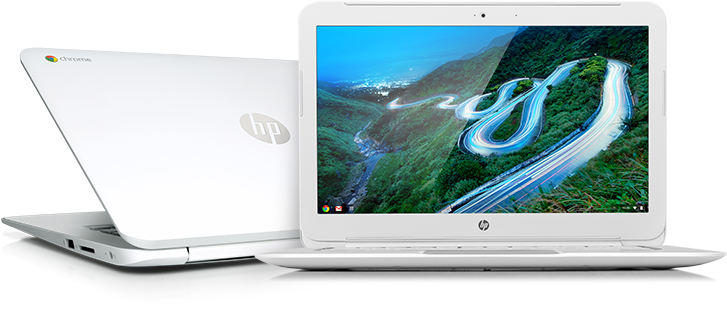
HP Chromebook 14
ChromeOS will not replace a dedicated PC/Mac.   I rely on Lightroom and Photoshop CC, which are not available for ChromeOS and probably never will be.  Processor intensive tasks are not what this platform is about.  What the Chromebooks are good for are tasks like this; updating my blogs, websites, taking care of social media.  They even have a remote desktop extension that will allow you to control another computer remotely, similar to RDP on a Windows computer.  Pretty much, anything that you want to do online, you can do with a Chromebook.

Some people dismiss the platform.  I believe this is because they do not understand it or they only know about Chrome from it’s early incarnations, not what it is today.

You might be asking yourself, what is this advantage or benefit of having a Chromebook over a PC.  Here are some:

1)  Light weight
2)  Fast boot up and shut down times - 7 seconds from the time you press the power button to ready to log in.  
3)  Price - generally cheaper than a lot of laptops.
4)  Stability - it is a closed system, so no worry on viruses and restoration is a one click affair to bring you back to “out of the box” status.
5)  Long battery life.  The HP gets 8.5 hours of battery life per charge.

Now, lets get to the photography related stuff.

The HP Chromebook 14, has USB 2.0 and 3.0 slots as well as a built in SD card reader.  Great for connecting up a camera for downloading images.  I’ve been able to do this with my Nikon and Olympus cameras.

On the editor front, there are both offline and online editors.  I’ve been experimenting with the Pixlr Editor(online) and Pixlr Touch Up(offline) software and while not as fully featured as an Adobe equivalent, it is sufficient to work some magic in post in the field or during a vacation. I even had one of my images that I processed in Pixlr Editor featured on their "Pic Of The Day" blog site!!

Processed using Pixlr Editor, Pixlr Pic Of The Day
I’m also going to experiment with Darktable using the appRoll website.  appRoll is a website service that hosts full versions of software on their site and allows you to run them on their servers.  There is a free and premium version.  So far, the free version seems to be sufficient for most purposes.

Pixlr Editor Interface
Pixlr Touch Up Interface
You can get access to depth of field calculator websites, photo forums, Flickr, 500px, and such.

So next time you are looking for a laptop, don’t discount the ChromeOS line of products.  They may not be for everyone and may not be the perfect fit for your needs, but as a supplement to your other computing devices, they have a lot of merit.  At a minimum, at least give them an honest assessment.  I think that most who do, would be pleasantly surprised at what you CAN do with a Chromebook, more so than what you CANNOT do with them.

Sunday, June 8, 2014

Nikon Df - The Revisit

I've had quite a few people on various forums ask how I have been liking the Nikon Df since I've had it now for an extended period of time.  I thought I would take the time to go back and revisit the Df and give an updated view on my thoughts and share some additional images.


It's been just over 6 months of using the Df and it is still my favorite camera to use.  The auto focus system works just fine and I've not had any issues with it in any lighting situations.  You'll be able to see in some of the sample images provided, some pretty low light scenes.


I find that I much prefer using prime lenses on it than zooms.  My main prime focal lengths are the Nikon 24/2.8, 50/1.8D and Tamron 90/2.8.   For me they feel better balanced, and for shooting street, they are quick focusing and less intimidating than big zooms.


For zooms, I occasionally use the Tamron 70-300/4-5.6 VC and the Nikon 24-85/3.5-4.5VR or 28-85/3.5-4.5.  They provide great image quality for the Df sensor.


I'm still shooting the camera using the "legacy" dials and hardly ever use the more modern control wheel scheme.   Obviously, there are times when I cannot avoid the control wheel when using some of the above mentioned zooms.


I've really connected with the Nikon Df.  I carry it with me all the time and have it connected with a Black Rapid strap system.


The only downside I have found is the screw in eyepiece does not have a locking mechanism and I've lost one.   Now, I make sure that the eyepiece is screwed in properly every time I get the camera out of the bag.
What more can I say about that D4 sensor!  It is fabulous.  Great rendering, wonderful dynamic range, phenomenal hi ISO performance - all still impressive today as it was 6 months ago.


I've used just about every new camera system that has come down the line including the Fuji X series cameras and the Olympus OMD series mirrorless.  While they may be smaller - they are not yet up to the performance level that I require for me to use them exclusively.