Tuesday, September 18, 2012

Always Have a Camera With You - Any Camera

Most people have a camera with them almost all the time.  Their cell phone has one 99% of the time.

It is a difficult lesson to learn, but this is a truth that I have learned through my journey in photography, the content of the image is more important than the gear used to capture it.

Yes, gear is important - but the vision, the passion, the meaning and soul of what people are seeing is the important factor - or at least it should be.

You don't(or shouldn't) judge a cook by their pots and pans, a carpenter by their brand of hammer or saw or a mechanic by the brand of wrench they use to repair your car with.   Don't judge a photographer or an image by the camera or lens that it was captured with.

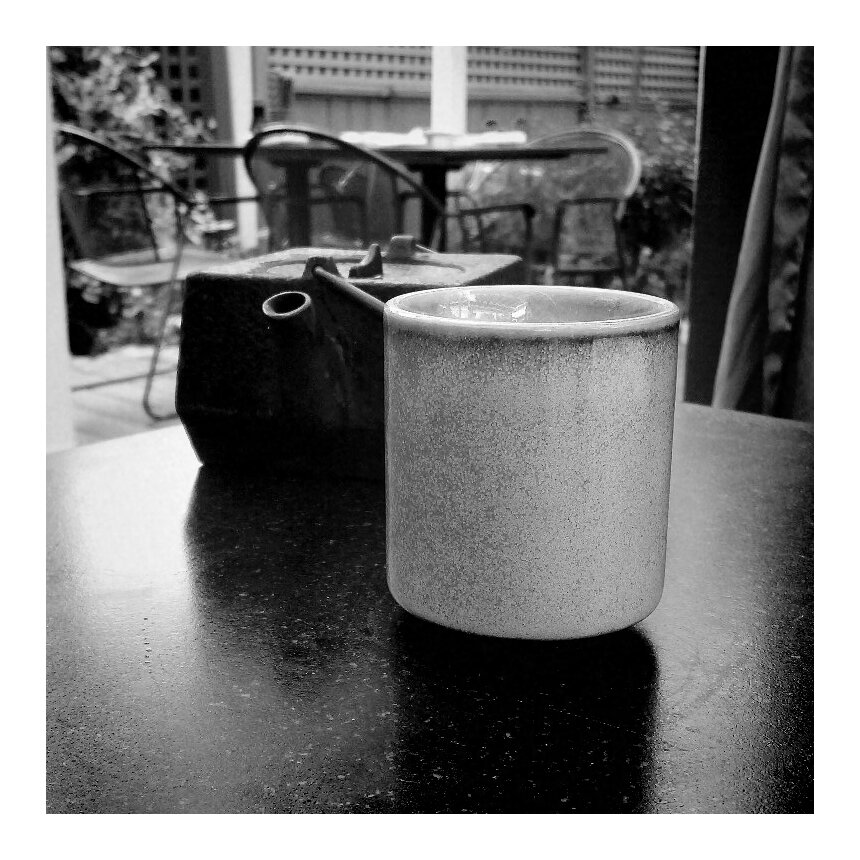
Here are some examples that I have taken:

99% of the time i have my cell phone or my Fuji X10 with me.

Without them with me - I would not have these images to share with you.


So, next time you think that you can only take great images because of the gear you have or think you are limited by the gear you don't have - think again.  Find a way to make what you do have work for you.

If you feel the need to buy new gear - ask yourself this - what problem is this new gear going to solve or how is it going to make your job easier?   If the answer comes back - it would just be cool to have or you just "want" it...then I recommend taking a step back and do some more retrospection before dropping lots of money on the newest thing.

Wednesday, August 1, 2012

Website version 2.0 is now LIVE!!!!

http://www.bestlightphoto.net

The new website is now 99%(just need to get the contact form page complete). All galleries populated and thumbnails are lined up as they should be. If you need to contact us, the phone and email are at the top of each page!!


Feel free to check it out!

Monday, July 23, 2012

Lets speak some truth - "manual" is better, right?

Reading articles in my spare time and there always seems a pre-dominance of people who are willing to give advice.  I've got no problem with that, do it myself on occasion and some people seem grateful others would like to rip my head off.   All par for the course, you've gotta take them as they come.   Sometimes you are right, sometimes you are wrong - take the good with the bad.

A peave of mine here lately has been(and this is not new, these types of articles have been running the gammut for as long as I can remember) bloggers spouting off the requirement of shooting in manual mode and/or stating that professional photographers shoot better than you because they shoot manual.  Manual everything - manual focus, manual exposure, manual flash.

Let us get one thing straight from the get go.  A professional does not get better anything because they shoot in manual.  A professional "should" get better results because they have educated themselves in their craft to the point that the technical aspects of their job are second nature and they can concentrate more on the art and staging of the shot.  A professional "should" know every aspect of their camera that is required to do their job successfully and fulfill clients needs.

A professional photographer should know when is best to use aperture priority, shutter priority, and manual mode.  What is the furthest they can push the ISO without losing the quality in the images they are capturing.  They know when to use ambient light, when to use speed lights or studio strobes, and when to mix the two.
"I am occasionally in manual exposure mode,say, when in a dark room where aperture priority will dictate to me an unreasonably long shutter speed. But, I tell you, if you only use these cameras inmanual mode because, as I have heard on occasion,you “don’t trust the camera,” or you “don’t trust the meter,” then you are taking a souped-up Ferrari and driving it like the little old lady going to church on Sunday. Why do that? Use the technology!  Take this puppy out for a spin and see what it can do."

       --  Joe McNally, The Hotshoe Diaries
What makes for a better image?  A newbie photographer with a Nikon D4/D800/Canon 1Ds Mark IV - or - a seasoned photographer with a experience and education on their side using a Nikon D5100 and a kit lens?   I'd take the experienced, educated photographer every time. 

Experience gains you the knowledge of creating successful images, and knowing how to get from A to B to C and not hoping to stumble across a great image by spray and pray.

At the end of the day, there are really too many factors to let any one person tell you that one way is the best way.  There are various ways to solving problems - so solve them how best it suites your situation.  If that means shooting in manual mode, then do it, if you are shooting through a fence or some leaves and your focus keeps getting locked on the wrong subject - throw that thing into manual and correct it - or leave it on autofocus and move your position!  You decide - I can shoot in matrix metering in aperture priority and use a little exposure compensation - you can shoot in manual - get the same shot - exactly the same shot.   Who is better?  Does the client care?  Did you deliver as promised?  If the answer is yes, then you made the right decision.

I'd think twice about taking too much advice from anyone that tells you they have "fool proof" methods of getting great images every time(unless fool proof equals experience and knowledge), systems, that one set of gear is going to get you better images over another.  Hell, question me too, for that matter!!  If we all agreed with each other all the time, how boring would the world be?  How could we learn other viewpoints and techniques?
"What is the best light to photograph with?"  He(W. Eugene Smith) responded, "The best light is available light".  He then added, "by that I mean any damn light that is available!"

       -- W. Eugene Smith
Besides, what is "better" anyway?  Talk about a subjective can of worms!  The only people that really matter at the end of the day that need chime in on "good or bad" are you and the client.   On the flip side of that - when you do ask for a peer review, take it from an open mind and realize that if you are asking a photographer their opinion - 99% of the time, you'll get a photographers opinion.  Then ask yourself - is that what you really want?  Do you want an opinion from a non art inspired, non-photographer type, your average joe/josephine as it were?   Target your inquiry to the group you really want the answer from, you'll get a better result that way.

Well, enough of my rant for the day.  Just remember that "knowledge is power"(Sir Francis Bacon) and "experience is an arch to build upon"(Henry B. Adams).

Thursday, July 19, 2012

How I Got The Shot #32 - The Smoking Dragon

If you read VisualOhio articles, you've probably seen the Asian Festival  article about the dragon boat races.  If not, jump on over to the site HERE and check it out!

I bring up the dragon boat races because my wife happened to be in one of  the competing teams.  As a way to honor her being selected for the team, I picked up an incense burner that is a replica of a dragon boat.
I was stumbling about the house and I saw the boat there and thought to myself that it would be a fun little project to setup a still life.
For this shoot, I wanted to highlight the subtle yet complex wisps of smoke from the incense and have some dramatic lighting for the boat as well.

Gear :
Fuji X10
Radio Popper JrX Transmitter and Receiver
SB-28
1/8" grid
LumoPro C-Stand with a 40 inch boom arm
Lumopro light stand with a boom arm
umbrella adapter/frio cold shoe
sync cable

Misc Items:
Freezer Paper
Dragon Boat
Tape
Incense sticks

EXIF Info:
Manual, ISO 100, f/7.1, 1/250th shutter
Speed light set at 1/8th power

The Shoot anad Light Setup:
I setup the small Lumopro light stand with boom arm(Not the C-stand) to hold the freezer paper.  This is used like a white seamless background.  I taped it across the boom arm. I then placed the SB-28 with grid on it onto the umbrella adapter and frio cold shoe - then attached the adapter to the c-stand boom arm.  I did this because I wanted the light above and slightly behind the boat and incense.

I then placed the boat and the burning incense on the white paper. Using different points of view from the camera and moving the boat about, I got quite a few different looks. Why is the light above and slightly behind?   Just like shooting moving water, the light going through the smoke creates definition around the smoke particles.  Light hitting from behind the smoke creates a diffused look and really makes the smoke bright white as it disperses the light.

Shooting with the light source from the front reflects very little light back to the camera and the smoke does not look as impressive.  You can also see from the shots that the grid is giving us a nice, white for the base of the boat, and as the grid light falls off  to the back we get a nice gradient that also helps allow for the smoke to stand out .

Post Processing:
Using only Lightroom 4.1, I wanted to have a pretty dramatic look.  This means looking at the CLARITY and CONTRAST sliders.   Cranking the clarity to 100 and bunmping the contrast 25 gave me what I was looking for.  I also used the CROP tool to fine tune the framing of the image.  Last steps were to bump up the VIBRANCE and SATURATION as well.   Each slider was moved up to 30.

Always remember - get as much correct in camera as you can.  It makes image edits much quicker and simpler.  It also gives you the best possible image to start with.  I used a good 5 or 6 minutes up front getting the camera exposure and the speed light power setup so that I had a proper exposure.  I spot checked the image on the LCD, but more importantly - I looked at the histogram.
Another note - by keeping the exposure and light power consistent, post processing is simplified.  When you get the first look of the image you want, you can just use the sync feature in Lightroom to apply those edits to a batch of images.